

When I was in
primary school, we were assigned to prepare a term paper each year and to
deliver it at the end of the academic year. I remember that we had a complete
set of Encyclopedia Britannica at home which was a very rich and essential
source of information for me. The data provided by these books with red
hardcover, unquestionably, was very satisfactory, reliable, and complete for
me. I always prepared my term papers by making reference to these books. I also
remember that the paper must have been produced in handwriting. If you made a
spelling mistake toward the end of the paper you had to write it down again or
you needed to use correction fluid which I hated since it made the paper seem
bad by damaging its aesthetic. As a prospective English teacher, now I am 30
years old, and when I think about all these details and make a comparison with
the facilities that I have today, I just smile.
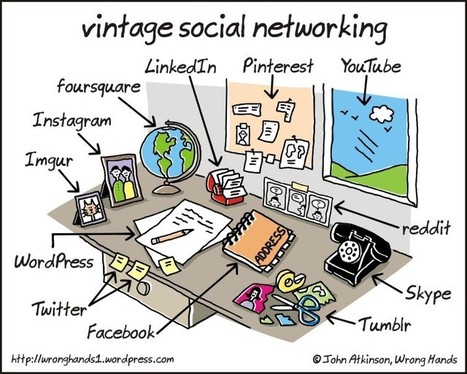
Computers have
become an inevitable and integral part of modern times. Increasing the
efficiency and productivity, they are unquestionably regarded as indispensable
for human actions in all fields such as healthcare, banking, administration and
education. Similarly, foreign language learning is of significance in today’s world
because it opens up a ton of career opportunities, establishes deep connections
and cross-cultural friendships, makes more information available, and so forth.
In other words, computer usage and language learning are two vital requirements
of modern life. What about language learning through computer assistance? Does
it sound reasonable to combine them? Is it really a good idea to benefit from
the computer technology for making language learning easier and faster? There
are different views about Computer Assisted Language Learning, also known as
CALL. Some people claim that CALL is not a productive and useful method.
However, CALL, in my opinion, is
beneficial, dynamic, and effective since it contributes to learning process by
enabling multimodal practice with feedback and individualization in a large
class.
It is clear that
one of the most significant aspects of CALL is the fact that it provides
learners with various useful and
efficient practices thanks to which they have chance to advance not
only grammar knowledge but also reading, writing, listening, and vocabulary
proficiency. One of the biggest barriers that the learners deal with is that
they are not given an opportunity for improving speaking skills in traditional
learning classes where the teacher is the central figure who lists grammatical
rules and principles one by one and asks students to memorize them before the
exam. In this classical system, students do not learn anything because they
cannot practice and reinforce what they study in classes. In addition to lack
of multimodal practice, they are not given useful and impartial feedback by the
teacher. Thus, students cannot improve their skills in reading, writing,
pronunciation, and so forth. However, CALL makes it possible to practice more,
and practice undeniably makes the perfect. In fact, most
people- even those who are against CALL- are aware of the fact that computers
are machines through which many goals- including language learning – are
achieved faster and in an easier way. For example, a study of 5,000 students in
China revealed that most of them learn English through computer programs and
course providing websites rather than traditional lectures at school.
Secondly, supporters of CALL assert that it is a way of making individualization in a large class possible. Gardner who is famous for his theory of Multiple Intelligence says that “Students learn in ways that are identifiably distinctive. ”Albert Einstein, similarly states that “Everybody is a genius. But if you judge a fish by its ability to climb a tree, it will live its whole life believing that it is stupid.” Both of the scientists put an emphasis on the fact that individualization is crucial for learning. It is true that classrooms are teeming with students of varying interests, backgrounds, abilities and learning needs. That’s why, it is a requirement to tailor the course and course materials to meet the learning needs, preferences and goals of individual students. CALL provides learners with this opportunity, and those who learn language via CALL system do not have to deal with problems stemming from rigid, boring and demotivating atmosphere of traditional teaching styles. While a study indicates that integrating the computer has turned a teacher-centered classroom into a student-centered one, another study conducted reveals that computer use dramatically enhances student motivation and self-esteem. This studies demonstrate that CALL, along with individualization, brings about high motivation and confidence which are two very important parameters in learning process.
Although there are
benefits of CALL, there are some people who believe that CALL is not useful.
The main reason opponents of CALL give is the problem of cost. Another problem
stated is that students don’t have enough ability and knowledge to use computer
programs.
It is an obvious
fact that computer technology is
not cheap. Not only hardware but also software and other necessary
components require a considerable budget. Furthermore, it is not enough to
establish laboratories because maintenance and replacement of equipment
periodically are other requirements which give rise to extra cost. For example,
computer laboratories at schools needs to be re-equipped approximately once in
five years in order to follow the advancing technology and maximize the
productivity.
Second, opponents
assert that CALL requires to be
competent in order to use computers and follow the programs. Since
most of the students are just interested in playing games, they lack necessary
computer knowledge. They have a very limited ability to benefit from computers
and programs. Although some of them can adapt easily, most of them will not be
able to gain necessary computer skills. Therefore, CALL is not fair, and it is
waste of time.
It is clear that
there are some advantages and disadvantages of CALL. Nevertheless, contrary to
the opponents’ assertion that CALL is an expensive system, as technology
gets more advanced, prices drop and products get better. “The US Bureau of
Labor Statistics tracks prices for broad categories of goods over time. As this
chart of prices for the last 18 years shows, prices have dropped dramatically
in almost every tech sector. The
drop in computer hardware is particularly steep.” In contrast to people who
believe students don’t have enough ability and knowledge to use computer
programs, it would not be an exaggeration to declare that children, especially
students, are living in front of their PC. They are professional at using
computers. Hence, it is ridiculous
to regard modern time students as ignorant of computer skills. In my
opinion, using computer is essential in today’s world. It is a requirement to
have proficiency in computer use in order to keep up with modern life. CALL is
a very effective program increasing the productivity of learning process by
saving time and energy, providing numerous practice opportunities, facilitating
complicated points and steps.
Unfortunately, I
am not as lucky as my classmates are as I did not have a chance to grow up with
computers. Furthermore, I do suffer from technophobia. That’s why, I sometimes
have trouble following the technological developments and using some tools
comfortably. However, I am absolutely aware of the fact that I have to
integrate technology into my teaching not only so as to grab my students’
attention, make my lectures enjoyable, save time and energy but also for
keeping up with the 21st century requirements for my individual needs and satisfaction.
Although I feel nervous about this, I believe I will manage it by paying enough
attention. Since I think the important thing is to use the programs and tools
effectively, I may start with very simple ones instead of complicated and
confusing tools. I may also learn about some tools from my students as they are
learning English from me. Why not?
References:
Gündüz, N. (2005).
Computer Assisted Language Learning. Journal of Language and Linguistic Studies
Vol.1, No.2,
October 2005.
Rosoff, M. (2015).
Every type of tech product has gotten cheaper over the last two decades —
except for one. Retrieved from https://www.businessinsider.com/historical-price-trends-for-tech-products-2015-10
Comments
Post a Comment